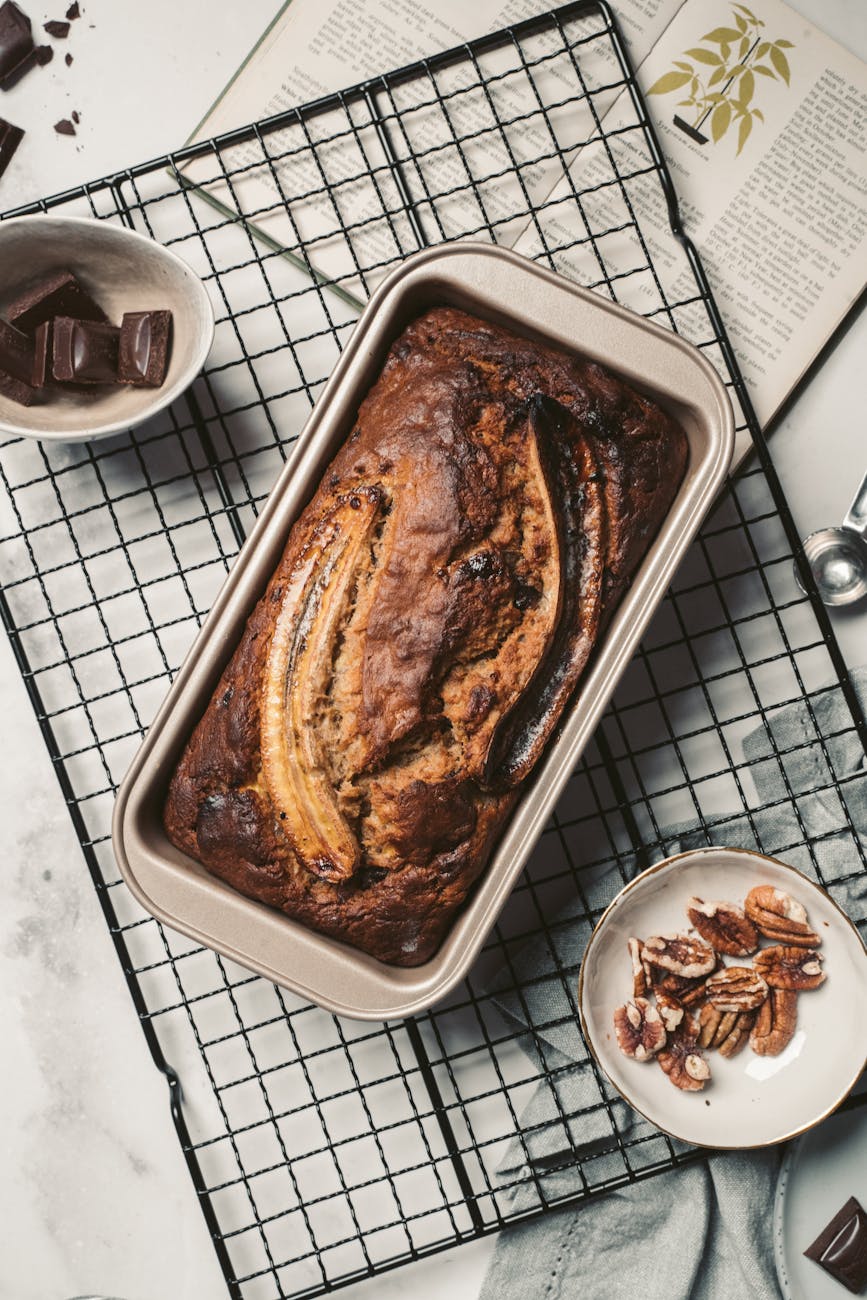
I absolutely LOVE banana bread, unfortunately my family do not share the same level of enthusiasm and so I don’t make it too often (because I eat it all). Last year I came across a healthy banana bread recipe, relying on the sweetness of very ripe bananas and with no flour, it is a great alternative to one of my favourite sweet treats. I have a slice of this, toasted with a little butter, as a treat when I am on a diet, and it really scratches that itch of having a sweet thing, without sending my sugar cravings into overdrive. I have suggested a few alternatives if you are vegan or allergic to any of the main ingredients, though I have not tried these myself.
80g butter, melted and cooled (use coconut or vegetable oil for vegan/dairy-free alternatives)
1tsp vanilla extract
100g ground almonds
80 porridge oats (whole or blitzed in blender)
Pinch salt
1 tsp baking powder
60g pecans or other nuts (slightly bashed with a rolling pin)
50-100g dark chocolate (recommend 70% or higher)
Method
Preheat oven to 180°C/160°C fan
Grease a 2lb/8inch loaf tin, or line with baking parchment/loaf liners
Place the bananas in a bowl and mash with a fork
Add the eggs, melted butter, and vanilla and stir well.
Add the almond flour, oats, salt, and baking powder and stir until well combined
Fold in the nuts, and chocolate if using
Pour the mixture into the loaf tin (top with a halved banana if you want)
Bake for 40 minutes until golden on top and the cake springs back nicely
Serve and enjoy!
A few tips!
This banana bread freezes really well. I pre-slice and freeze in food bags, the slices can then be defrosted in the microwave or simply by taking out the fridge 24 hours before you want to eat it. I recommend lightly toasting the banana bread after defrosting.
If you want a slightly smoother texture then I recommend blitzing the oats in a food processor.
This is a really adaptable recipe, feel free to add/remove the fillings. Raisins/sultanas, other nuts, and mixed spices work really well.
Top the banana bread with a bit of butter, nut butter, or berries and yoghurt for a sweet treat or filling breakfast.
Almond & Oats: I have tried this recipe using just almond flour (so 180g overall) and it worked really well, if you can’t have/don’t like almonds then I suggest using the equivalent of blitzed oats or a flour alternative.
I apologise for being slightly late with last weeks post, I could provide some mildly valid excuses, but I was tired after a long week and spent most of Sunday lazing in the sunshine (after all we must make the most it). The hustle and bustle of last week meant I was somewhat indifferent to doing anything besides sleeping, eating, and taking the dog for a walk. However, I did manage to squeeze in a concise but compelling novel by Ian McEwan, The Comfort of Strangers.
Also in this week’s post: As spring arrives in all its colourful glory, with daisies and daffodils popping their heads through sun kissed grass, I am sharing one of my favourite recipes to make this time of year; wild garlic pesto, made from the fresh young leaves of the plant that grows in abundance on the woodland floor. Remember to always forage responsiblyand with permission from the landowner.
The Comfort of Strangers, by Ian McEwan
McEwan has written his way into my list of favourite authors, with a style that can be equally chilling and funny, you never quite know what you are going to get when you pick up one of his novels.
If I could describe The Comfort of Strangers in three words they would be, macabre, intense, nauseating. At just shy of 200 words, it is a short novel, but captivating, and will doubtlessly stay with you long after you have closed the book and placed it back on the shelf. Written in 1981, it was McEwan’s second novel to be published, following an equally thrilling book, The Cement Garden.
In the novel we join Colin and Mary on a city holiday and observe as they try to rekindle lost desire. Sex, arguments about dinner, reconciliation, the silent treatment, a joint every evening, and the odd emotional revelation; it is a strained relationship that unfolds between the pages. The pair spend a few days consuming local delicacies, exploring the tourist hot-spots, drinking, getting lost in the city maze, and then arguing about what direction the local hot-dog stand is in. There is something somewhat familiar, comfortable, about the first chapter of the novel. Though Mary and Colin hardly have a relationship worthy of envy, they are as far as novel characters go, incredibly normal. Flawed. Human. McEwan lays a very clever trap here, luring you into a false sense of security; what possible macabre happening could occur to such a dry and mundane couple? Lost and hungry, they happen upon Robert, a local man with a gold razor blade worn round his neck – mental note: never trust a man, or any human, who wears a razor blade around their neck. They join Robert and his wife, Caroline, in their beautiful house, depicted something like a terraced Venetian dwelling, and thus a series of events unfold that will leave a mark on the couple, and the reader.
The novel strikes an intense chord by unmasking our deepest fears that behind the smile of a stranger, beneath a kind gesture, there lies peril. Of course we spend our lives being warned about the myriad of dangers that threaten us daily; from people we know, people we don’t know, people we love, people we think we know. But of course, it would never happen to me. No-one, even the most mundane among us, is not off limits.
Ultimately The Comfort of Strangers is a beautifully written novel, eerie and sinister to the last word. If you want a light-hearted read, then do not pick this book up. But if you want a chilling read, one to keep the pages turning and stand your hair on end, then this is the book for you.
This Week’s Highlight: Wild Garlic Pesto
As spring arrives in all its colourful glory, with daisies and daffodils popping their heads through sun kissed grass, I am sharing one of my favourite recipes to make this time of year; wild garlic pesto. If you go walking in the woods and notice a familiar, slightly garlicy smell, then it is likely you are near a patch of allium ursinum, more commonly known as wild garlic. This distant relative to the onion grows between late March and July in moist woodland throughout Europe and Asia, and is perfect if you are looking for something to forage.
Note: please forage responsibly in the wild, within the confines of the law, and always considering the responsible foraging guidelines set out by The Woodland Trust.
Ingredients
300g wild garlic
150g basil
75g parmesan
2 finely chopped garlic cloves
Juice of 1 lemon
100g toasted pine nuts
300ml rapeseed oil
Salt and pepper to taste
Method
Thoroughly wash the wild garlic leaves and leave to dry between layers of kitchen paper or towels.
Once the leaves are mostly dry (don’t worry if they are ever so slightly damp) place them in a large food processor with the lemon juice and rapeseed oil and blend until very finely chopped.
Squeeze in the rest of the lemon juice, the parmesan, the garlic, and pine nuts, blending together until the desired consistency is reached.
Adjust the salt, pepper or lemon juice to taste.
Spoon the pesto into sterilised jars and drizzle a little olive oil over the top.
It can be frozen straight away or kept in the fridge for up to two weeks.
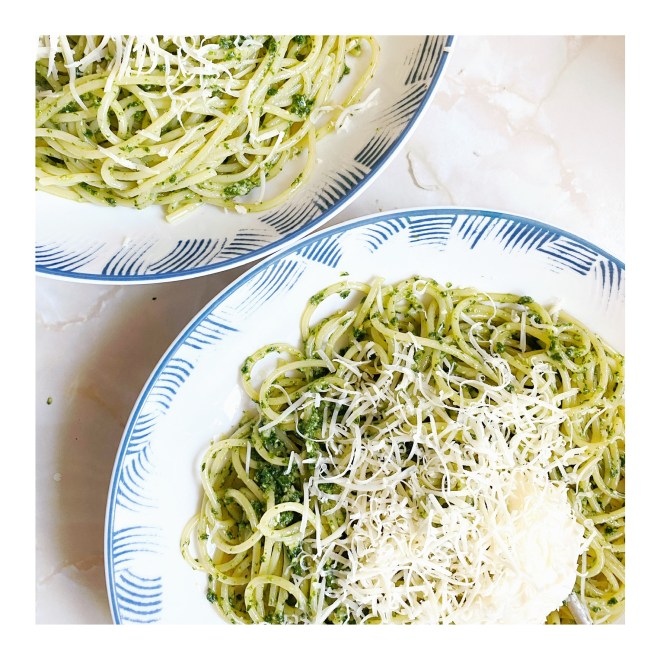
Serve on pasta, with gnocchi, mixed with feta atop a crouton, the opportunities are endless!

 Happy Lifestyle Happy Living