Happy Bank Holiday Readers! If you have enjoyed a long weekend like those of us in the UK, then I hope it has been peaceful, and filled with a bit too much chocolate. My weekend has been consumed with baking, reading, swimming, and stealing moments of tranquility in nature in between the showers of rain. Following on from my post last week, where I wrote about finding myself visited by an old foe, I have been taking as much time as I can to be in nature. Nature is my therapy, my haven. It is the place I retreat to when I need perspective, and so I made the most of a long weekend to get back into my place of healing. I explored, got lost, and found a haven of paradise drenched in bluebells and cuckoo flowers. Bathed in dappled sunshine I stood in the valley, watching a buzzard spiralling into the sky, and a herd of deer grazing on the hillside. It was truly tranquil. I could have stayed there in the symphony of nature for hours, however I retreated from the valley when the sun sunk below the tree-line and a cool breeze rolled in. I came back to a blanket filled sofa and this week’s book, Cider with Rosie by Laurie Lee.
Cider with Rosie, by Laurie Lee
Cider with Rosie is the vivid memoir of Laurie Lee, telling the tale of his remote village childhood surrounded by fields, woods, eccentric neighbours, rural schooling and wild imagination. It reflects on the last years of a village enjoying freedom from modern invention, a peaceful image shattered in Lee’s early teens by the chugging of the first motor car up the narrow road. It was soon followed by charabancs and motor bikes, and the days of silent village life were over. Having grown up around Stroud, near Laurie Lee’s village, I sometimes yearn for a more peaceful time, for life before mobile phones, travel, convenience, pollution. I am lucky to be one of the last generations who can remember an early childhood untainted by mobile technology. My days were spent outdoors, exploring the rolling hills of our Cotswold home, or the sprawling wilderness of my Grandma’s garden. Lee reminds me, however, how lucky we are to have some of the comforts of modern life. I have never had to spend a night freezing cold (except when my hot-blooded husband insists on opening the bedroom window mid-winter), nor have I had to worry about food on the table. When I yearn for a simpler time it is not without being grateful for all the comforts and conveniences that come with modern life. Lee’s childhood is a testament to a life before technology, when life, though not without its hardships, was simpler.
Lee’s writing is a poetic journey for the senses. In every page you can see, smell, taste, all the world around young Laurie. The floral wine of Granny Wallon, the sharp snuff of Granny Trill, the beech-twig fire that warmed the kitchen hearth, and the smell of a large family kitchen, spices, old rags, candle wax. Lee has a fantastic ability to describe details poetically, metaphorically, whilst conjuring in your mind the clearest image of what he remembers. I can picture Granny Trill, chewing her gums in ecstasy after a good sniff of snuff, I can picture his mother bent over a large vat of porridge in the kitchen, and his siblings working away at whatever childish or adolescent fancy took hold of them that day. You are there, in the book, beside Lee as he navigates his first days of school, has his first giddy sip of wine, and experiences the tragedies of remote village life with all the innocent wonder of a child. At points the narrative feels so familiar it is easy to forget what century Lee is writing about; a childhood full of blackberries, and wild countryside, and rampant imagination, in many aspects it mirrors my own (with a couple less gum-chewing grannies); and then you are brought back to reality with a reminder of the past…”there was a £5 a year wage”. Lee was reflecting on his mother’s childhood in the late 1800’s, and suddenly it all felt very alien, very distant. But a few sentences later and you are back with Lee in the crowded kitchen of his family home as his sisters shelter from the cold and the boys fill tins with smouldering rags to keep them warm on winter excursions.
Lee is a beautiful storyteller, drawing you into his tale with a wonderful blending of poetry and prose, and Cider with Rosie has earned a place in my all-time favourite books. It is a beautiful recollection of a childhood long gone, free from the conveniences, complexities, and constraints, of modern life.
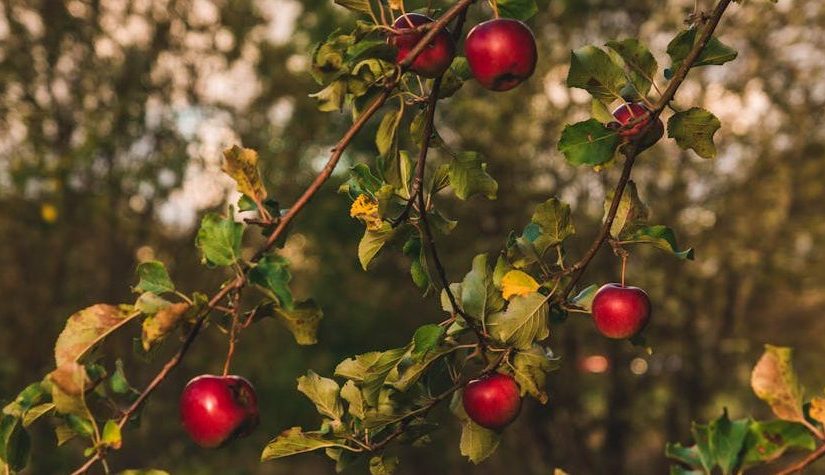
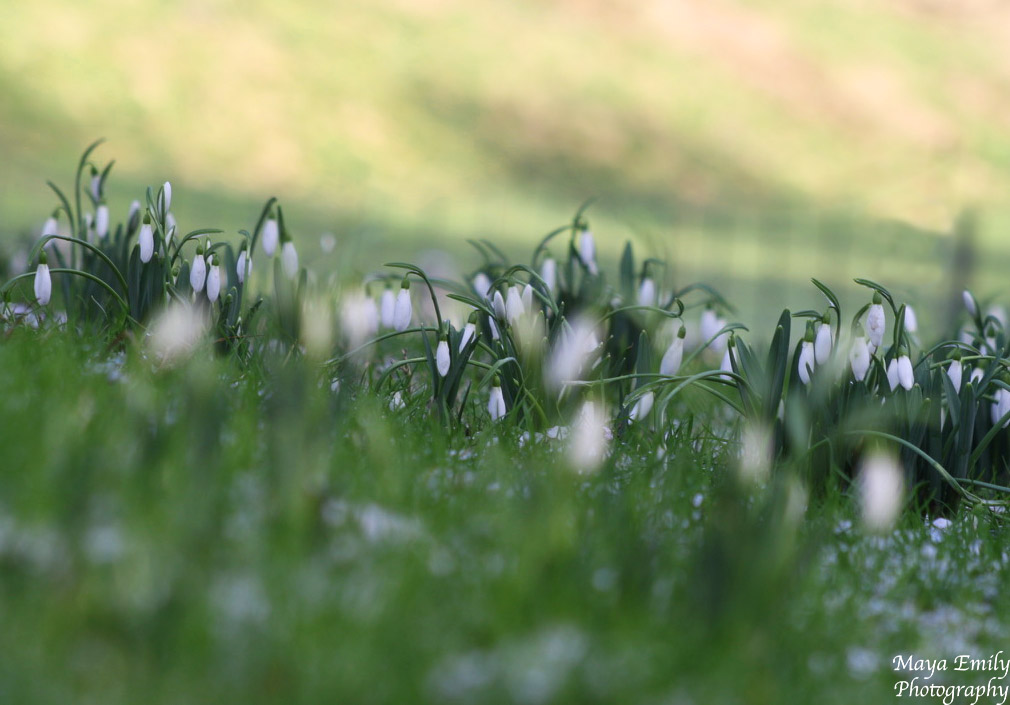
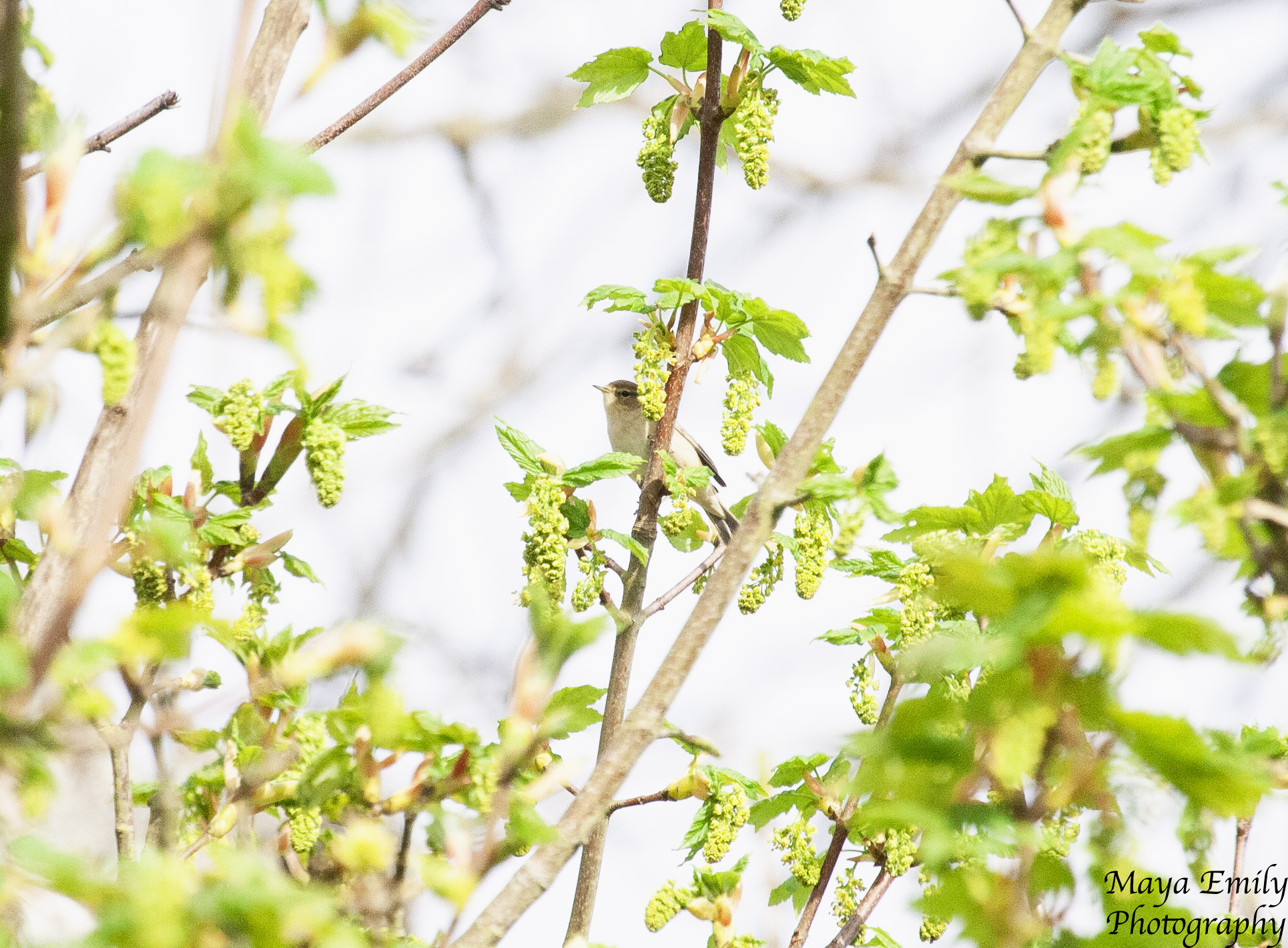
I hope you have enjoyed this week’s review, to end my ode to nature, I have selected a few of my photos that display the simple beauty of our natural world.
If you live in the UK then, like me, you’ve probably been making the most of the glorious sunny days that have blessed us this past week. In the evenings however, we are coolly reminded that it is only April, when the sun rolls down the horizon and the air takes on a bitter chill; so here I am curled up with a blanket, dressing gown, cup of tea and dog on my feet. This week we join Salman Rushdie on his breathtakingly honest account of the attempted assassination that almost took his life; and we join a young MI5 recruit as she juggles love and state in Ian McEwan’s novel, Sweet Tooth.
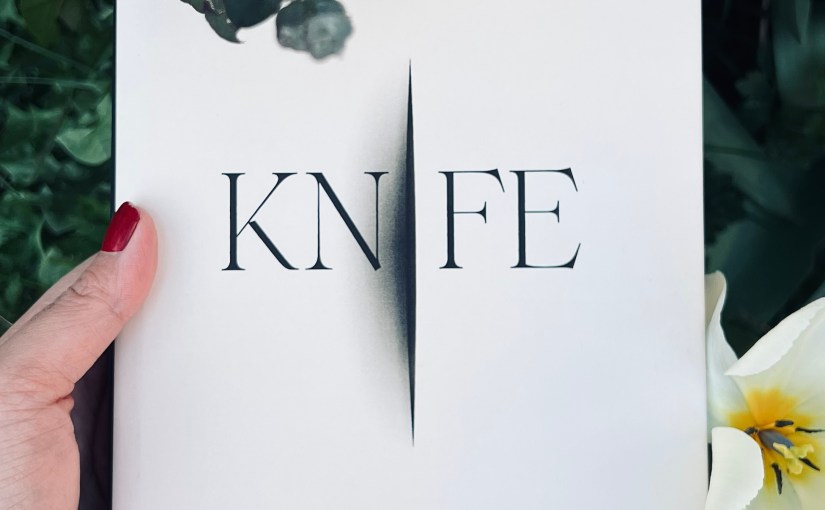
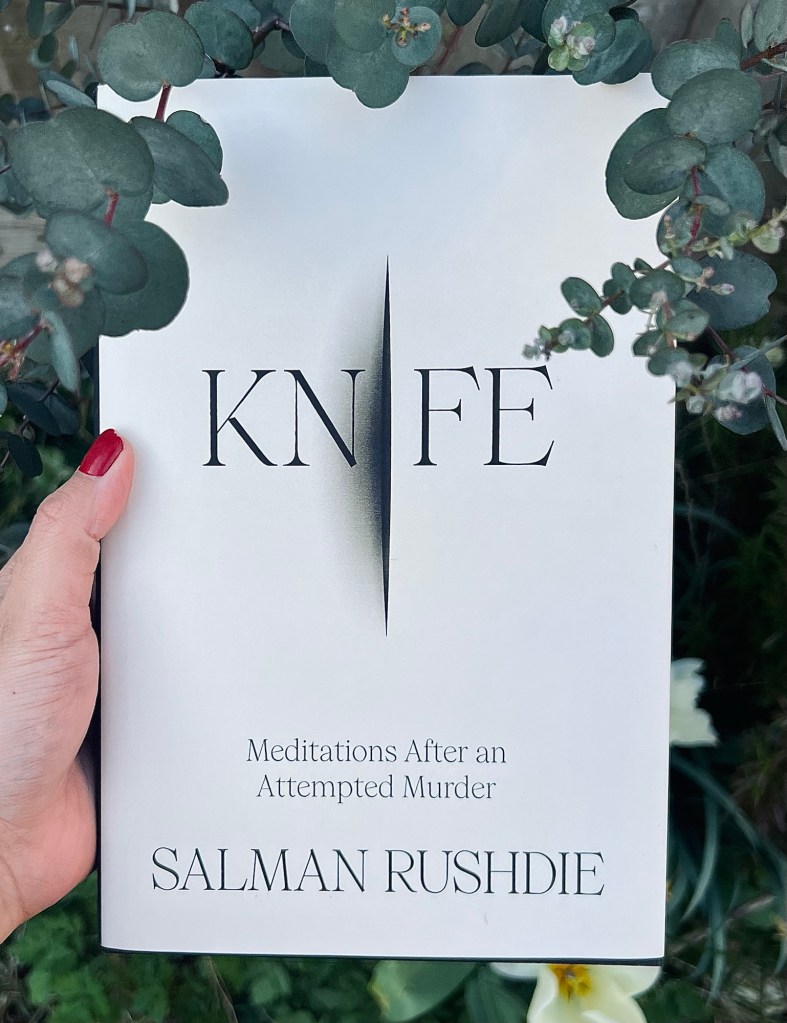
Knife, by Salman Rushdie
Meditations After an Attempted Murder
I have a deep admiration for Salman Rushdie, whose literary works combine historical fiction, religious exploration and magic realism, to take you on journeys of faith, wonder, and morality. In Knife, Rushdie attempts to make sense of the abhorrent attack on his life, taking us on his journey of contemplation, love, loss, reconstruction and healing.
Since the publication of his fourth novel, The Satanic Verses, in 1988, Rushdie has spent much of his life in hiding, or at the receiving end of death threats, for the book’s depiction of the prophet Mohammed. In 1989, a fatwa was ordered by the Supreme Leader of Iran at the time calling for the death of the author. Rushdie evaded many attempts on his life, and was even taken into police protection following an attempted assassination, but tragedy followed the book elsewhere. This review, however, is not about The Satanic Verses, and the unfortunate series of events that followed its publishing, and thus I will dwell on it no longer; but if you don’t know about the life of Salman Rushdie, it is an important foundation in understanding the context of Knife.
In 2022 Rushdie was in attendance at the Chautauqua Institution in New York, where he was preparing to give a lecture on the importance of keeping writers safe; Rushdie acknowledges the deep seated irony between the subject of the lecture, and the events that were to unfold that day. Rushdie had just stepped out onto the stage, ready to discuss the merits of the City of Asylum Pittsburgh project, which offers refuge to literary creators whose safety may be at risk in their own countries, when a man ran towards him. Dressed in black, with a mask to cover his face, the man pulled a knife and attacked. Rushdie outlines early on in Knife that he does not not want to use the name of the assassin in the account, and so out of respect, I will do the same here. After all, the account, and this review, are not about this cowardly assassin, who was too young to have been alive when the fatwa was issued, and by his own admission had not even read the book that inspired so much vitriol against the author. This review is a testament to the strength and determination that Rushdie has shown in the time since.
It is clear from Rushdie’s account that his life was on a knife-edge that day. Once recovered, the doctors told him bleakly that when he had arrived by helicopter with 15 stab wounds, they had been uncertain whether his life could be saved. But through the dedicated skills of the doctors and nurses of UPMC Hamot, and by Rushdie’s own sheer will, he survived; and twelve weeks later returned home to New York. Rushdie’s account of the attack is bluntly human, grisly, but of course in Rushdie’s way, tinged with a sense of humour that we humans require after a great tragedy. I smiled a little when he spoke of the delirium he went into immediately after the attack, where a principle concern was that those attending him would have to cut his nice Ralph Lauren suit.
The age old question of ‘what what I do if it were me?’ does dance at the edge of your subconscious when reading of Rushdie’s actions during the attack. It is a question he himself asks “why didn’t I act?’, and a question he does not have an answer for, “some days I’m embarrassed, even ashamed…other days I tell myself not to be stupid, what do I imagine I could have done?” Of course in any situation like this social media is littered with echoes of ‘I would have done this”, “I would have done that”. I firmly believe none of us know how we would act in such a situation until it occurs. We all like to think we would fight back, or find a burst of adrenaline and run faster than we have ever done in our lives, but I think we are far more likely to be paralysed by indecision and fear. Violence out of context is abhorrent to modern morality. Schools, places of worship, shops, nightclubs, theatres, these are sanctuaries, places of pleasure that should be untouchable by bullet or blade. So, when something happens that blows our morality to pieces, we falter. This was evident in the shock waves that went round the world in the wake of the attack. While Rushdie’s account is a dark narrative on the worst humanity has to offer, it also presents the best humanity has. The love we have in our family and friends, those who will be with us in our darkest days.
If my admiration for Rushdie wasn’t already at its peak, then it most certainly is after reading Knife. It is ferociously honest, deeply moving, and a testament to survival. Rushdie is at his best, with his ability to make you weep, laugh, and examine your faith in just a few paragraphs.
Book Review – Sweet Tooth, by Ian McEwan
Sweet Tooth takes place in 1970’s England, where Serena Frome is recruited for a position at MI5, as a typist. Promptly, Serena is chosen to take part in a new covert programme, Sweet Tooth, that aims to counter Communist propaganda that has seen a surge during the Cold War. Serena, a lover of fiction, is given the mission of befriending and vetting a fledgling writer at the University of Sussex, Thomas Hayley. We watch as Serena’s world begins to unravel, as her past catches up with her, and her future turns ever more murky.
Sweet Tooth is set in the backdrop of a turbulent political landscape, the Cold War, industrial strikes, ‘the winter of dicontenment’, escalation in Northern Ireland and rising support for communism, were the palpable themes throughout the 1970’s. Exasperated by a government clinging to remnants of post war ideals, the citizens of Britain became disillusioned with the electorate and in 1970 the Conservatives succeeded in bringing in a motion of no confidence against the incumbent Labour government. A 5.2% swing from Labour to Conservative was a stark reflection of the grievances felt against a government who had ‘allowed’ Britain to shrink into misery.
The story, although entirely fictional, is inspired by a scandal that shrouded the conservative literary magazine, Encounter, when in 1967 it was revealed to have received covert funding from the CIA; no doubt in order to steer the content of the magazine in an anti-communist direction. This backstory provides the perfect medium in which to explore the relationship between layperson and government, between artist and state, and it is a stark reminder of the need for literature to remain independent and free from influence (outside the natural influence of the writer that is). A quote by McEwan reflects that the aim itself, to counter communist propaganda, was not the issue, but it was the secretive, underhand, way in which it was done that caused such scandal.
“All that’s really required is that anything the state does in relation to the arts is laid on the table where we can see it.”
Sweet Tooth is a longer novel and it does seem to crawl along at times, but it is a comforting and intelligent read. Romance, spies; relationships, jobs, McEwan once again makes art out of the mundane, ‘normal’, life. This is not an action packed James Bond, in fact it is probably a far more realistic account of what work goes on within our Intelligence communities, but it is thought-provoking. As much of McEwan’s work, it is centred on a compelling moral dilemma and explores the depth of human complexity when faced with such dilemmas. I will admit it is not my favourite of McEwan’s work, but not every novel need be as thrilling as The Cement Garden or as serious as Enduring Love. Sweet Tooth is an enjoyable read, perfect to take at a slow pace.
I hope you have enjoyed this week’s reading, I would love to hear what you have read this week.
On this grey and drizzly Sunday I have taken refuge in my local spa, a brief weights session, a dip in the pool, and a book to finish just about distracted me from the gloomy outdoors. This week we travel to Ancient Greece to trace the story of an exiled goddess; to Essex where we join Hastings and Poirot on their inaugural case; and finally, for a break from the fiction, to a decade ago in America where a Vice journalist unravels the passage of events that led to the 2017 Charlottesville tragedy. I hope you enjoy this week’s reading.
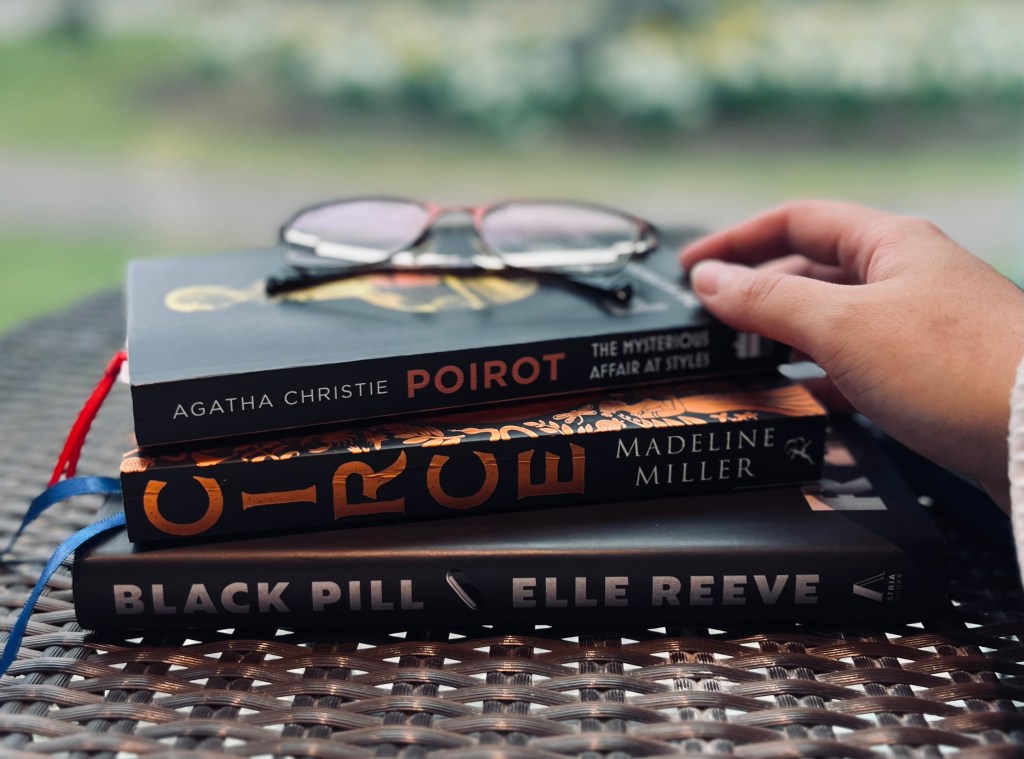
Circe, by Madeline Miller
I picked up Circe on a whim a few months ago, drawn in by the setting of Ancient Greek gods, and finally tempted by the flattering reviews on the front cover – and though one should never judge a book by the latter, the ornate bronze and black cover was pleasing to the eye. Greek mythology has always fascinated me. The mainstream religious texts portray their deities as paragons of virtue, and rarely acknowledge the hypocrisy contained within the pages, Greek mythology is much less forgiving. The gods are of course, omnipotent, omnipresent, omniscient, but they are also jealous, bitter, resentful, merciless. Humanity manifest. Showing a deep contempt for mortals, especially among the most powerful gods, they see humans as nothing more than flies, fleeting lives that will disappear in an instant. They hold themselves superior in every way, and yet they squabble, deceive, slaughter, much in the same way as the creatures they see as no more valuable than dirt. The only difference is they can’t die, so they can go on feuding and hating and pillaging for millennia – okay, they have some pretty awesome powers too. I could continue for pages about Greek Mythology – perhaps that is another post – but this lays the groundwork well for understanding the themes explored in Madeline Miller’s Circe, the retelling of a classic mythology.
Circe, daughter of Helios, god of the sun, and Perse, an Oceanid nymph, is born a disappointment to her parents, with a mortal voice and no significant destiny. Her fleeting childhood, for gods grew quickly, was marred by rejection from her family. Her mother had been disappointed she was not fated to marry a great god, and discarded her in favour of trying for another child. Her siblings Pasiphae and Perses, spent most of their days tormenting Circe in their father’s great halls, disparaging her looks, voice and demeanour with vile and repulsive taunts. Her father cared not for his children, until they became a problem, or a means to an end. So, Circe spent her first few hundred years in misery, resigning herself to a life among gods and nymphs who, while malevolent toward one another, seemed to unite in torment of her. It is an exaggerated parallel that I’m sure many of us can relate to on a mortal degree, not fitting into society’s cookie cutters is a lonely existence and it is not difficult to feel Circe’s pain – though some small grace is not having to face it forever.
Circe realises her destiny when the flowers she enchants transform her mortal love into a powerful god of the sea, but her gift comes at a price. Her artistry in witchcraft threatens Olympus and in penance for her defiance against the gods she is exiled to the island of Aiaia. There she builds her sanctuary, practicing and refining her art, taming wild beasts and growing herbs in a well-tended garden. Not before long visitors begin to arrive, some bring friendship, some bring terror, and one brings destiny; Odysseus, Greek hero of the Trojan war, favoured mortal of the goddess Athena. Circe is a story of family, love, and tragedy, and ultimately of discovery. Circe, a lesser goddess trying to dazzle in a world of unparalleled nymph beauty and hideous god power, discovering her limits and how to exceed them.
A Homer for the modern age, Miller beautifully retells the tragedy of Circe in an adaption fit for the modern age, yet retaining the majesty of the original mythology. I highly recommend this book to any keen reader or lover of Greek mythology.
The Mysterious Affair at Styles, by Agatha Christie
I first fell in love with Monsieur Poirot, and by extension the works of Agatha Christie, when curled up on my Grandma’s sofa we would watch the ITV adaptation of the famous detective, played expertly by David Suchet. Reading the books takes me back to those times, the tattered sofa in garish floral tribute, with covers hiding worn arms in equally dated textiles – for all the love I have for my Grandma she had interesting tastes in interior design. The house was always heavy with the scent of living; pets, books, soap, it was the quintessential loved family home. It is shocking then, that having been a fan of Poirot and Christie for so many years – for those sofa days are further back than I care to calculate – that I have never gone to the origin, to the novel that started M. Poirot on his journey to becoming one of the most famous fictional detectives in history.
The Mysterious Affair at Styles was not Christie’s first literary attempt, but it was her first detective story, born of a dare from her sister, Madge, who “bet you can’t write a good detective story”. Inspired by the Belgian refugees arriving in her hometown of Torquay, and her job in the local hospital dispensary, Christie devised her detective and her murder. Persisting through a number of refusals to publish, Christie eventually found a publisher willing to work with her, and her first book went on sale on 21st January 1921. Reviews of the book were favourable, and despite Christie’s initial insistence that she would not pursue a writing career, and luckily for the rest of us, The Mysterious Affair at Styles set in motion the dawn of a prosperous career for Christie.
Having read a number of Poirot novels by now, I wasn’t sure what to expect when I journeyed back to the beginning. Are books like pancakes, does the first one turn out a little bit wonky before you perfect your technique? Besides perhaps a slight repetition I have not noted in her subsequent works, The Mysterious Affair at Styles embodies all the thrilling misdirection that is the crux of Christie’s work. The path through suspicions, motivations, and little evidence, to the murderer is a turbulent ride with a number of cleverly placed veers in suspicion. I have to admit I let out an incredulous chuckle when Monsieur Poirot revealed the identity of the killer, feeling some of the shock that poor Hastings must have felt, and perhaps some of the foolishness that I was so far wrong yet again. And yet, time after time it is a delight to be bested by one of the best literary minds in humanity.
With well-written characters and carefully timed intrigue, The Mysterious Affair at Styles is thoroughly enjoyable, ingenious, and hard to put down.
Black Pill, by Elle Reeve
How I Witnessed the Darkest Corners of the Internet Come to Life, Poison Society, and Capture American Politics.
Black Pill is a stark journalistic view from the trenches of the incel and alt-right communities that laid the foundations for the 2017 Charlottesville terrorist attack, resulting in the tragic death of Heather Heyer.
In Black Pill, Elle Reeve recounts her exploration of the events that led to the Charlottesville ‘Unite the Right’ rally, subsequent riot, and tragic death of an innocent woman. From a proto-incel community on 4chan a seed of hate blossomed into a subculture where self-proclaimed ‘involuntary celibates’ developed the belief that their lack of sexual gratification was the fault of women. This manifested over time, in the sordid, anonymous, corners of the internet, into a passionate and violent philosophy. These men were owed what they were being denied. Rape and assault were celebrated as the just response to the injustice being compelled upon them. The danger of this philosophy was realised when it crept out of the internet and into the real world; when mass murders were committed by members of the subculture who had been taken in by the misogynistic, self-pitying, entitled ethos of the community. The name of Reeve’s book draws its inspiration from a belief held, most commonly, by incels; that women are shallow creatures who choose only the most handsome, society-approved, men, the ‘Chads’. To be ‘blackpilled’ is to believe that society is broken, geared only towards the ‘perfect people’, that your place in the system is anchored, hopeless. Takers of the black pill believe they have been dealt an unlovable hand in life, that nothing they can change (personality, looks or otherwise) will ever help them achieve their romantic and sexual dreams.
It was when this community collided with another, a Nazi movement growing in confidence, that the extremism reached new heights. Fred Brennan had developed 8chan as a place for free speech, that is another thread unpicked in Black Pill, but it was eventually infiltrated by a growing alt-right movement that expelled users with neutral, or at least more neutral ideals than their own. It became the birthplace of QAnon, where conspiracies and absurdities were woven into truth and ultimately stormed the Capitol in 2021, in one of the worst attacks on democracy America has seen in recent years.
Reeve is brave, not afraid to put herself in danger so that the world may know not only of injustice, but of the events that lead to it. Resilient and resolute in interviews that would have had most of us seething in anger. Her ability to remain outwardly unbiased in interviews to gain the trust of her subject, is an art. She knows how to lay her words carefully to unravel the darkest motivations of the interviewee, pressing them just enough to reveal themselves, but not so much that they build a wall. She sees that behind the faces of “evil” are complex emotions, motivations, tragedies, and ignorance. Understanding the steps in the path to Charlottesville; rising confidence in racists, a lonely man lamenting his disability, ignorant views on eugenics, and the rise of social media that gives platform for all the latter to be turned over in anonymity, is a stepping stone on the path to understanding extremism. We can condemn racists, bigots, misogynists, but without being willing to understand the root of their beliefs, we cannot hope to combat, or educate, it.
One question that Reeve explores, that I played over and over in my mind on closing the book, and continues to fascinate me, is the question ‘are fascists stupid?’ Most people would probably say “Yes. No argument, they are stupid, they are idiots”. I see it repeatedly when Trump or Musk raise their moronic heads in conversation or on social media, and there are clamours of ‘he is so stupid’, ‘he doesn’t know what he is doing’. Whilst many of the decisions we see being made in the Oval Office are beyond the comprehension of any sane person, the fact is they are occupying the Oval Office. These two ignorant, bigoted men occupy the highest office of one of the Western power houses. The decisions they make are stupid, their beliefs are stupid, but are they? Whilst I don’t disagree with the general sentiment that fascists are stupid, Reeve raises an important point, by dismissing people as stupid or idiotic, you underestimate them, you think they cannot possibly achieve what good, intelligent people can achieve, and yet history has proven this to be a flawed philosophy time and time again. There have been many awful, but awfully intelligent people, so why are we so resistant to the fact that intelligent people can be evil? Reeve puts it eloquently in her book:
“Smart people have been told all their lives that being smart is a virtue, and, implicitly, smart people are virtuous…the sick, sad truth is that the world is not being ruined by dumb monsters but by smart people just like us.”
The Nazi’s who feature in Reeve’s interviews can be eloquent, even politically astute, as Reeve puts it, “they notice that smart people need to feel like they’re logical, principled thinkers, so they create cringe propaganda to make them feel alienated from activists for social justice.” Those are not the actions of the stupid, but of intelligent, if thoroughly misguided, people. I must say at this juncture that I do believe the atrocious, tangled web of entitled eugenic misogyny at the heart of the incel and Nazi belief systems is unquestionably stupid. But the people who lap it up, lap it up for a reason, and if we want to educate against fascism and extremism we must lower our own prejudices and understand the root cause. Extremism can be a learned behaviour, it can be based in faith, or a response to legitimate dilemmas. Confused, alienated, frustrated, people come together with a shared goal and leave with a shared ideology, often targeted at something besides the root cause of their unhappiness, for it is far easier to imagine an enemy than to self-reflect.
I could go on, but I do not want to detract from Reeve’s work. An important piece of journalism for the modern age Black Pill lays bare the power of the meme, of social media, and of combined discontentment and ignorance.
I hope you have enjoyed this week’s reading, I would love to hear what you have read this week.
Welcome to a new series where each Sunday I write about the books, articles, or other literature I have read in the week prior. Having struggled with writer’s block for the past year or two, I am diving head first back into the creative pursuits that bring me joy and inspiration. I (or the tag team of anxiety and depression) have starved my creativity with work and inane social media consumption, and whilst I must continue with work, I have ruthlessly curtailed the latter. So, now is the time when I must turn the lens inward and nurture myself with the hobbies I have been depriving myself of. Forever one of life’s great mysteries is why we consume content or partake in platforms that drive the dark storms in our minds, rather than taking the time to engage in healthy, positive activities. Of course, we know it comes back to dopamine, the old chestnut of immediate gratification and long-term loss, and I must admit I do still enjoy the occasional capybara video. I digress, please enjoy the summary of my week’s reading…
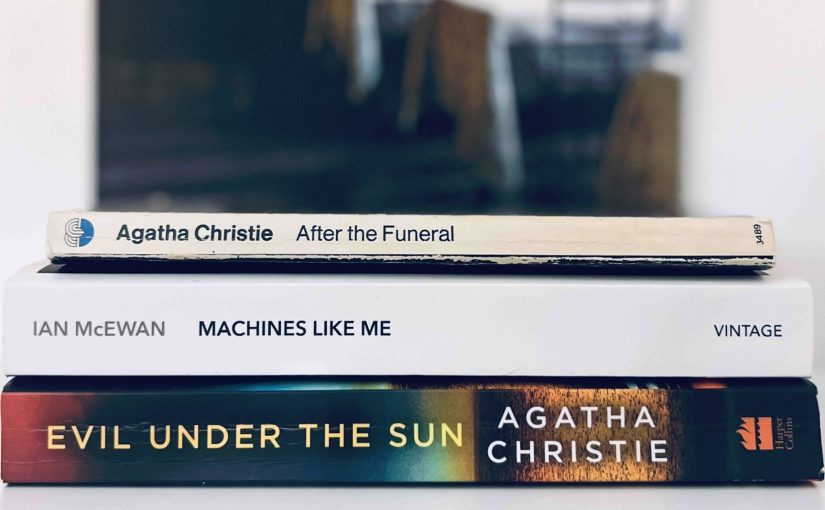
This series is partly coming about because this Christmas just gone I set a rule to our family that I was not allowed any more books until I had started to make my way through the many I had purchased that year. To my dismay everyone obeyed the rule. There are still many books I wish to purchase, and so I have decided to abide by my own rule and make my way through my bookshelves. This week I have consumed After the Funeral and Evil Under the Sun by Agatha Christie, and Machines Like Me, by Ian McEwan.
After the Funeral, by Agatha Christie
Part of the combined joy and frustration of reading Christie is knowing that she will lead you down a veined road of motivations, intuitions and evidence, only to best you every time with a beautifully placed twist. Knowing there is a twist coming never seems to take away the magic from Christie’s books, and that is part of her genius. After the Funeral is no different, a complex amalgamation of family feuds and vain ambitions, and at the end a delightfully unexpected flourish when the murderer is revealed. Initially I found it one of the least gripping of Christie’s novels I have read thus far, I think in part to the late appearance of Monsieur Hercule Poirot, who joins a few chapters in. It was nonetheless an enjoyable and easy read. The plot is engaging, once you get the hang of who is who in the Abernethie family, admittedly I had to refer back to the family tree at the beginning of the book a number of times to discern whether we were reading about a brother, nephew, widowed sister-in-law or other relative. A few times I was sure I knew who the killer was, and a few times I was wrong. Although I found the book a little slower than some of her other novels, the ending was one of the best. I highly recommend this book, an enjoyable and comforting read.
Evil Under the Sun, by Agatha Christie
Following After the Funeral I was on a bit of a Christie kick and had recently bought a beautiful old copy of Evil Under the Sun, I discovered halfway through the novel I had actually already bought a copy of the book a couple of years ago, and you will now start to understand why I laid down the ‘no new books’ rule.
Evil Under the Sun is one of my favourite Christie books so far. I felt some compassion for Poirot, who, even on holiday, finds himself in the throws of an investigation. When an expected murder (the reader gets a small win early on when the person we expect to be murdered actually is) mildly startles the holidaymakers at the Jolly Roger hotel, we follow Poirot and Inspector Colgate as they attempt to unravel the motivations of the murderer. Jealousy, affairs, witchcraft, and drug smuggling, there are no shortage of suspects…except they all seemingly have alibis. It is a gripping novel that kept me up late as I desperately wanted to know who had killed the beautiful man-magnet, Arlena. Once again Christie has woven the threads delicately to a conclusion that makes you skip back through the pages to see if you could’ve guessed right with a little more time. It was a thoroughly enjoyable read that anyone who likes crime and Christie will find captivating.
Machines Like Me, by Ian McEwan
Having reliably been bested twice in a row by Agatha, I decided to divert to a different genre. McEwan has written some of the most enthralling and chilling books I have read, Comfort of Strangers and The Cement Garden being two titles worthy of their own reviews. I settled on Machines Like Me, one of McEwans more recent titles published in 2019, and based in a dystopian alternative 1982 where Britain had lost the Falklands War, JFK had evaded his assassination, and Alan Turing was alive and pioneering research into Artificial Intelligence. I chose an interesting time to read this novel, with the sharp upsurge in AI hitting the media in recent months, it felt like a stark reminder of the complications that come with entangling our lives so profoundly in technology.
The scene is set with a young man, Charlie, living in London, and his purchase of an Artificial Life-form, Adam, his love interest, Miranda, and his precarious means of survival by playing the stock market. McEwan continues his ability to make the mundane complex, recognising that human beings, with all their idiosyncrasies, are rarely simple. We follow Charlie and Miranda as they fall in love and navigate ownership of one of 24 flagship Artificial Life-forms. The book is as much an exploration into human impulses and complexities as it is into our advancement of Artificial Intelligence. McEwan expertly shows how little we understand ourselves, our motivations that are so based on the moment, on experience, and on intuition, rather than logic. Two worlds collide in Machines Like Me, impulsive, unpredictable, humanity, and logical, considered, computers. Some make the assertion that we are no different from computers because our brains work in a similar fashion, the brain uses chemicals to transmit information, a computer uses electricity to do the same. There is no denying we are machines, in a sense, bio-mechnical in nature, however, this doesn’t account for the fact that we still understand so little about how our brains truly work, and recreating something you don’t understand is something Science Fiction has warned us fervently against. This is why Machines Like Me is such a fantastic read, the overarching story is a little “everyday mundane”, but deeper it is an analysis of what can happen when the world moves forward too quickly. As we advance forward technologically, at a pace unprecedented throughout human history, literature like McEwan’s remind us we still have a long way to go and we will make mistakes along the way.
Machines Like Me is not stomach churningly page-turning, but it is fascinating and it will leave you rolling over the progress of humanity in your mind. Reading it against the backdrop of the current world stage, it will ignite in you a debate on the moralities, practicalities, complexities and philosophies of our drive to advance Artificial Intelligence.
I hope you have enjoyed this weeks reads, and I look forward to sharing more with you next week.








 Happy Lifestyle Happy Living